Program Evaluation Proposal for UCI Student Services
Project Overview
In partnership with the UCI Joe C. Wen School of Public Health, I contributed to the evaluation of a UCI student services program to better understand participant experiences, assess program effectiveness, and identify opportunities for continuous improvement. Using a community-centered evaluation approach, our team collected and analyzed stakeholder feedback to develop practical, evidence-informed recommendations that support student success and strengthen campus services.
Project Goals
The evaluation aimed to:
Assess participant experiences and satisfaction with program services.
Identify strengths, challenges, and opportunities for improvement.
Inform program planning through evidence-based recommendations.
Support continuous quality improvement and student-centered service delivery.
Key Deliverables
The following deliverables highlight the planning and evaluation tools developed throughout the project. Together, these materials demonstrate the systematic approach used to understand the program, engage stakeholders, and establish a strong foundation for conducting a comprehensive program evaluation.
Program Evaluation Proposal
Developed a comprehensive program evaluation proposal outlining the purpose, evaluation questions, methodology, stakeholder engagement plan, data collection procedures, timeline, and anticipated deliverables for the evaluation of UCI Student Services. The proposal established a structured framework for conducting the evaluation, ensuring that evaluation activities aligned with program goals while providing a clear roadmap for implementation, collaboration, and evidence-based decision-making.
Logic Model
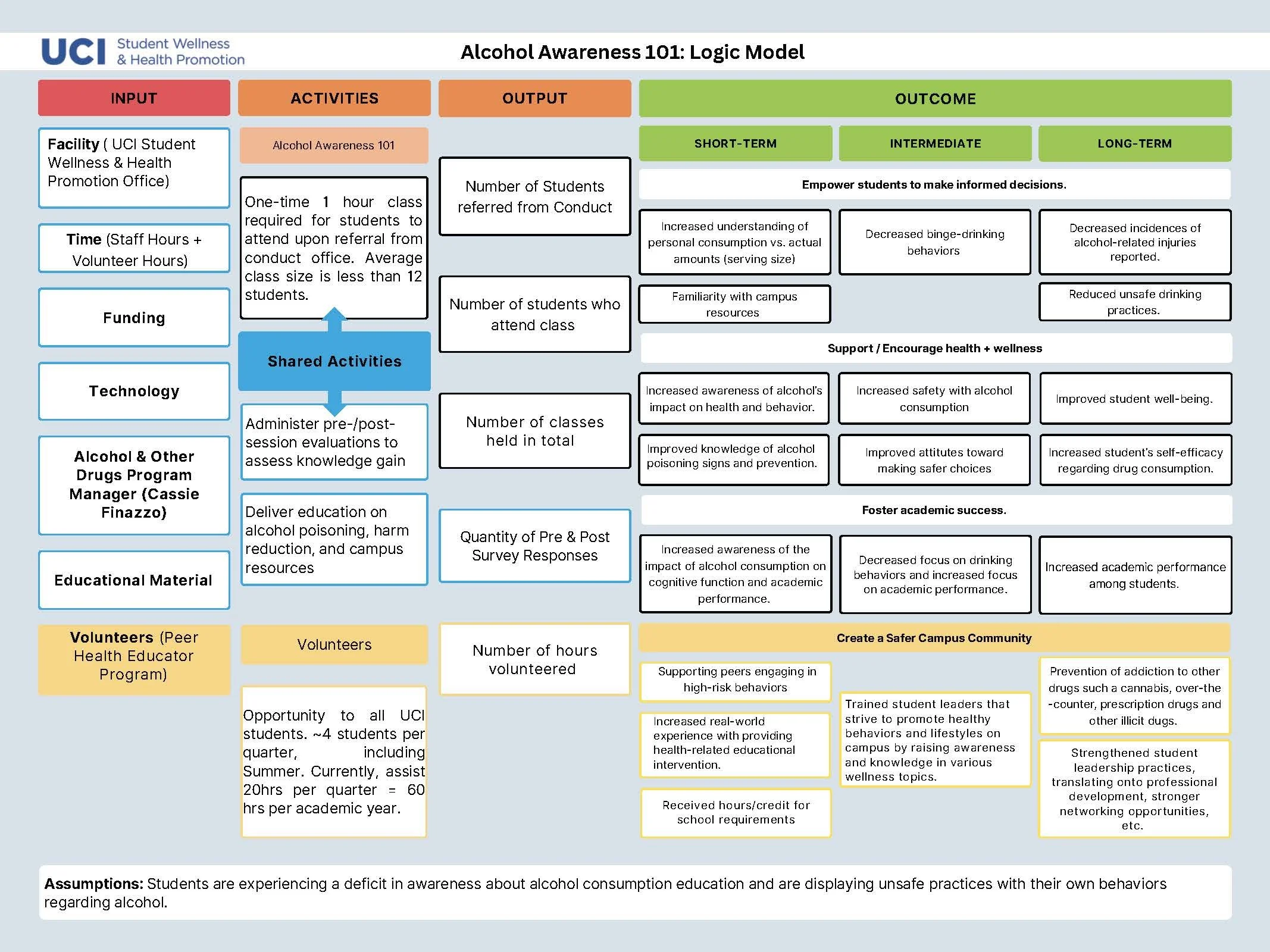
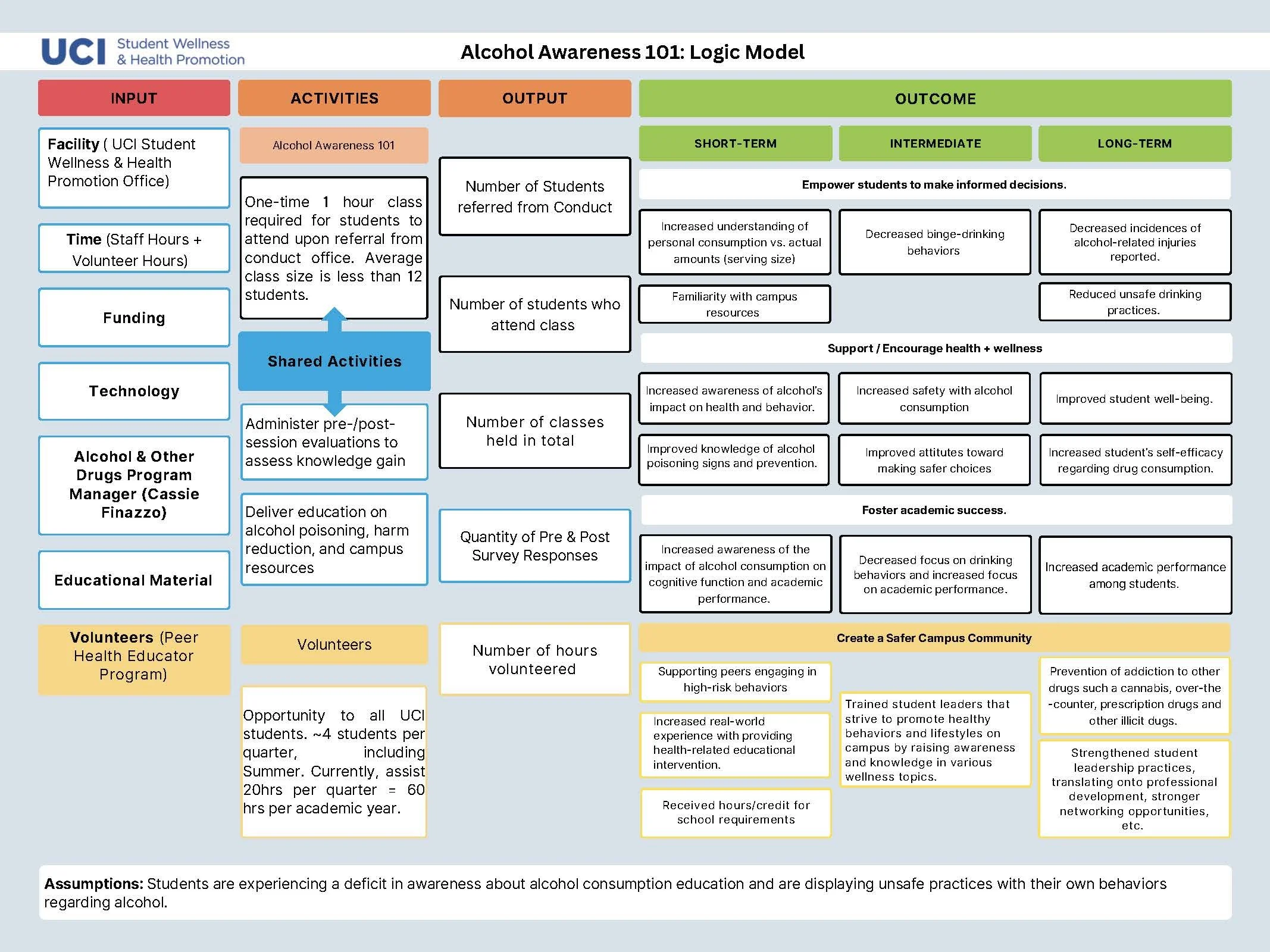
Developed a logic model to illustrate the relationship between program resources, activities, outputs, and intended short-, intermediate-, and long-term outcomes. The logic model served as a planning and evaluation framework that clarified the program's theory of change, guided the selection of evaluation measures, and ensured alignment between program goals, implementation, and anticipated impact.
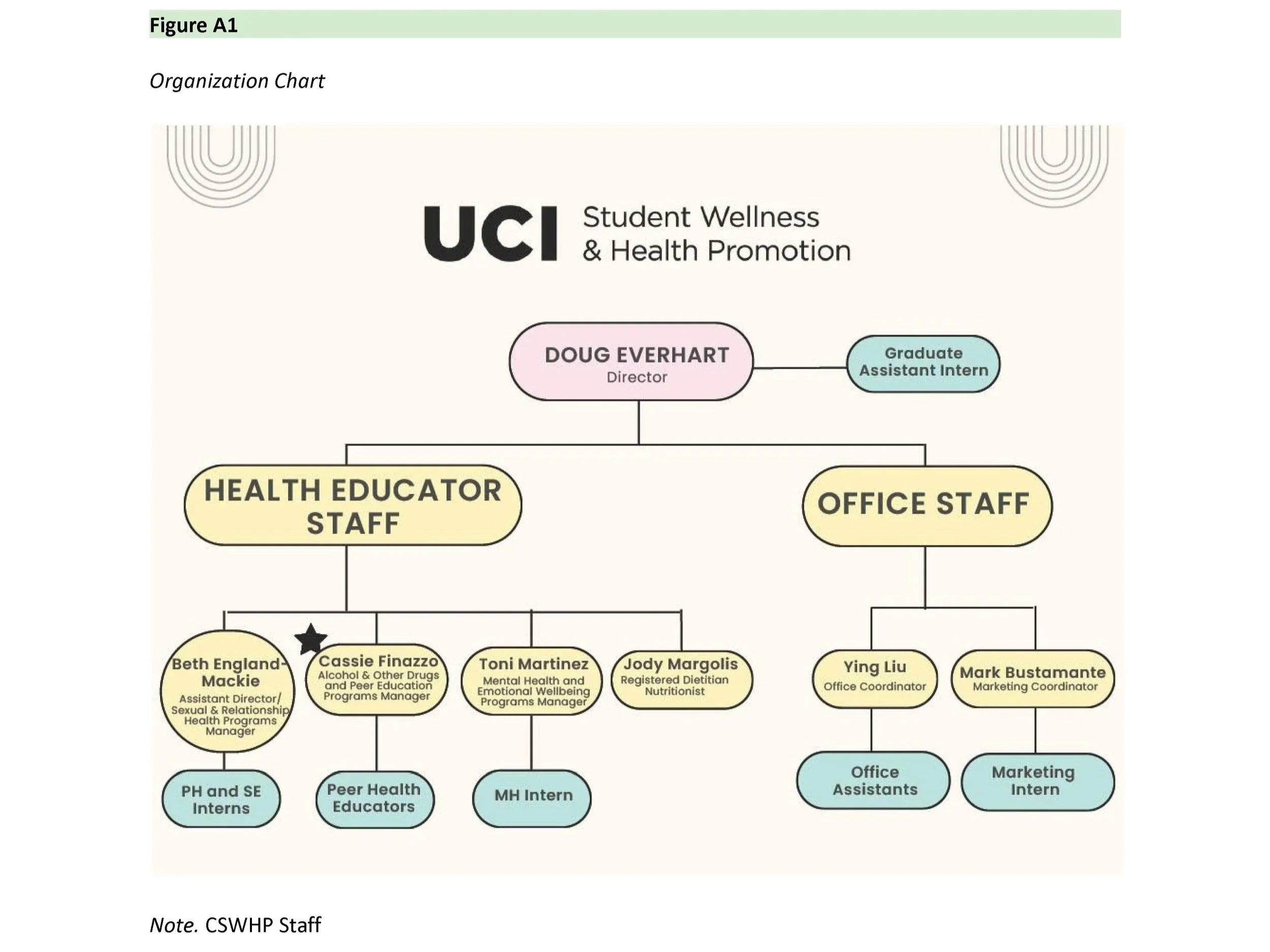
Organization Chart
Developed an organization chart to map the program's leadership structure, reporting relationships, and key stakeholder roles. This visual reference helped clarify organizational responsibilities, identify decision-makers, and improve communication throughout the evaluation process. It also supported stakeholder mapping and informed the planning of data collection, interviews, and dissemination activities.
Evaluation Approach
The evaluation followed a systematic, stakeholder-informed approach to assess program implementation and participant experiences. Through evaluation planning, organizational analysis, logic model development, and data collection planning, the project established a framework for generating actionable recommendations to support continuous program improvement.
Project Gallery