
Patronato Pro Niños Program Evaluation
Project Overview
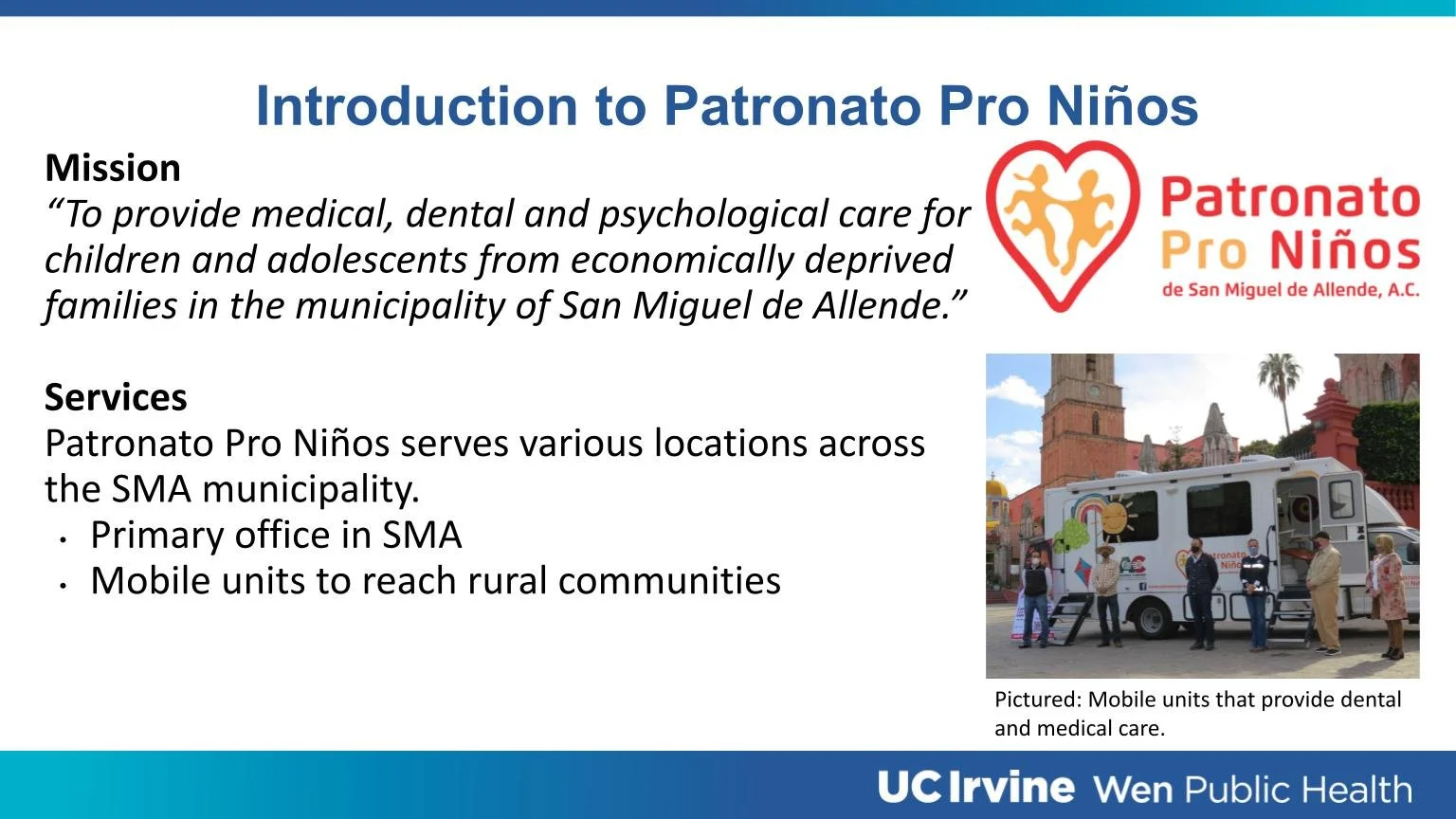
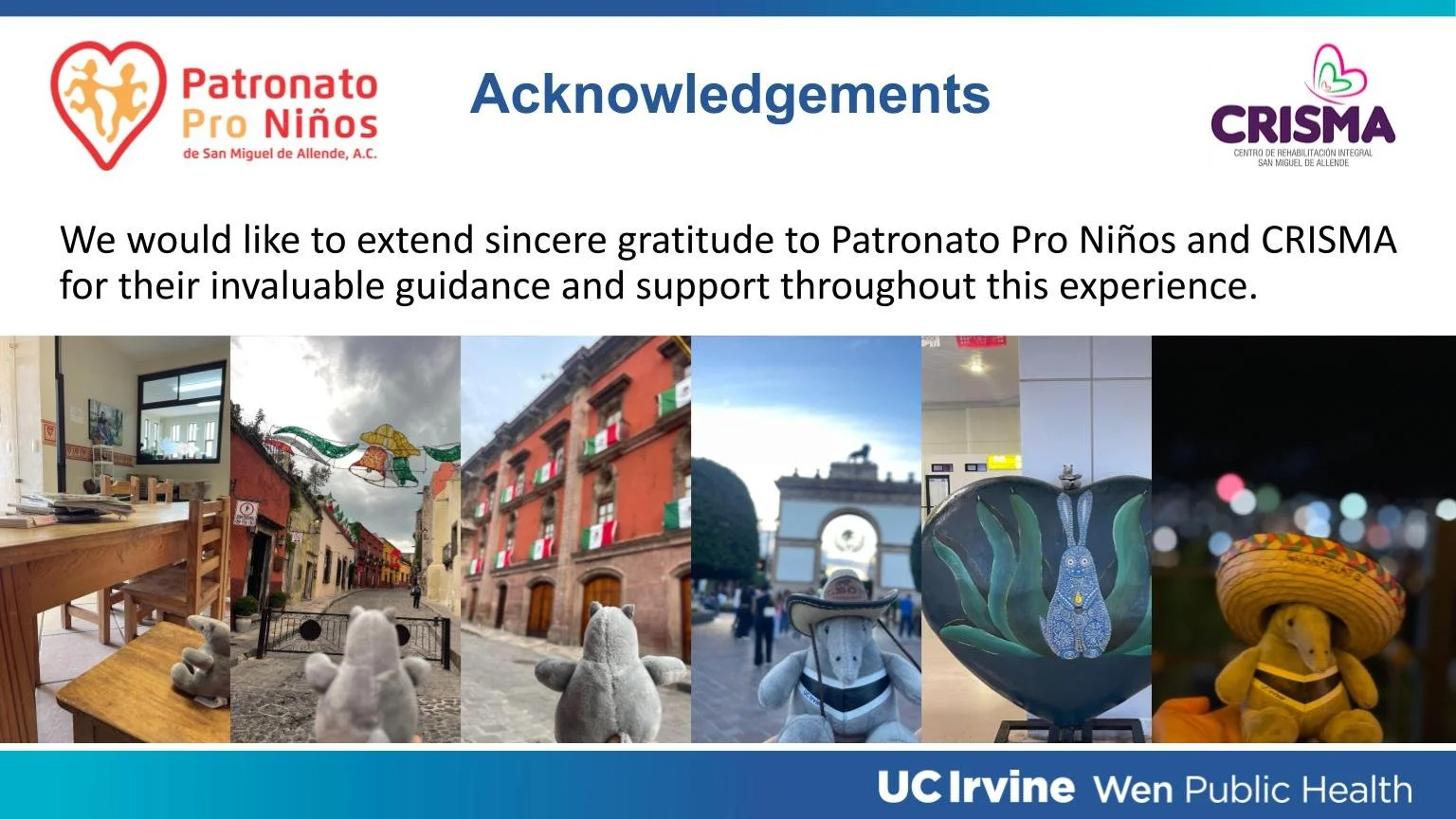
In partnership with the UCI Joe C. Wen School of Public Health, I participated in a community-based program evaluation with Patronato Pro Niños, a nonprofit organization dedicated to improving the health and well-being of children and families in Guanajuato, Mexico. Working alongside faculty, students, and community partners, our team evaluated program implementation, participant experiences, and opportunities for continued growth.
This project combined community-engaged research with cross-cultural collaboration, demonstrating how program evaluation can strengthen organizations while ensuring community voices remain at the center of public health practice.
Project Goals
The evaluation was designed to better understand the effectiveness of Patronato Pro Niños' programs and identify opportunities to strengthen service delivery. By engaging directly with community members, staff, and stakeholders, the project aimed to collect meaningful feedback that could inform future planning, improve participant experiences, and support evidence-informed decision-making. Throughout the process, emphasis was placed on collaboration, cultural humility, and ensuring that community perspectives remained central to the evaluation.
Key Deliverables
The project resulted in several deliverables that supported both organizational learning and academic dissemination. Deliverables included:
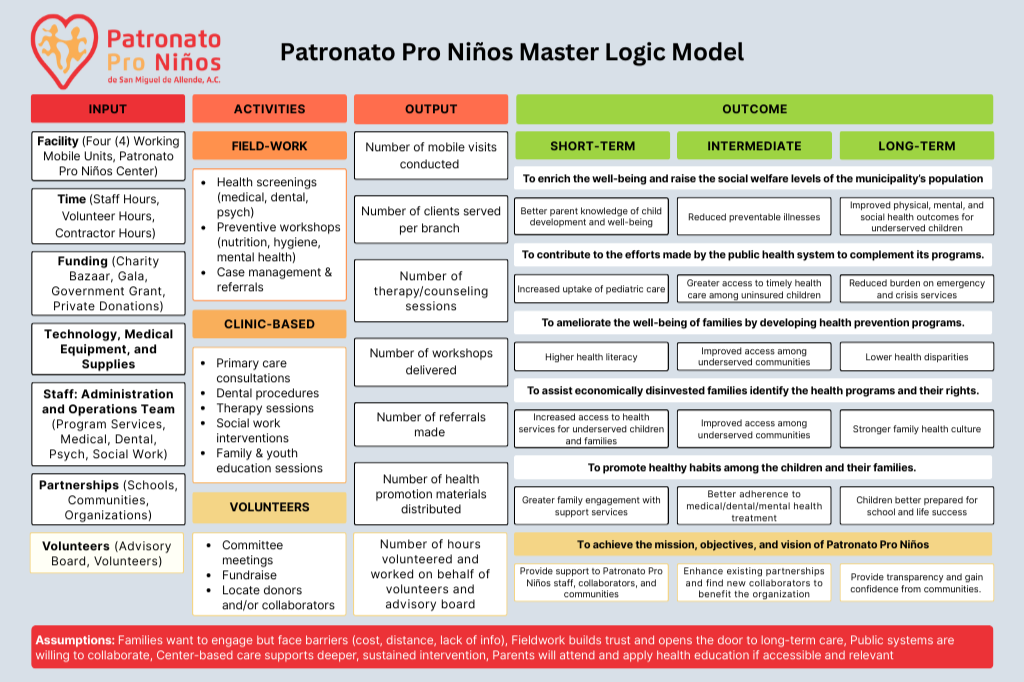
Logic Model
Developed a logic model to visually map the relationship between program resources, activities, outputs, and intended short-, medium-, and long-term outcomes. The logic model served as the foundation for the evaluation by guiding data collection, identifying key indicators, and ensuring alignment between program goals and evaluation objectives.
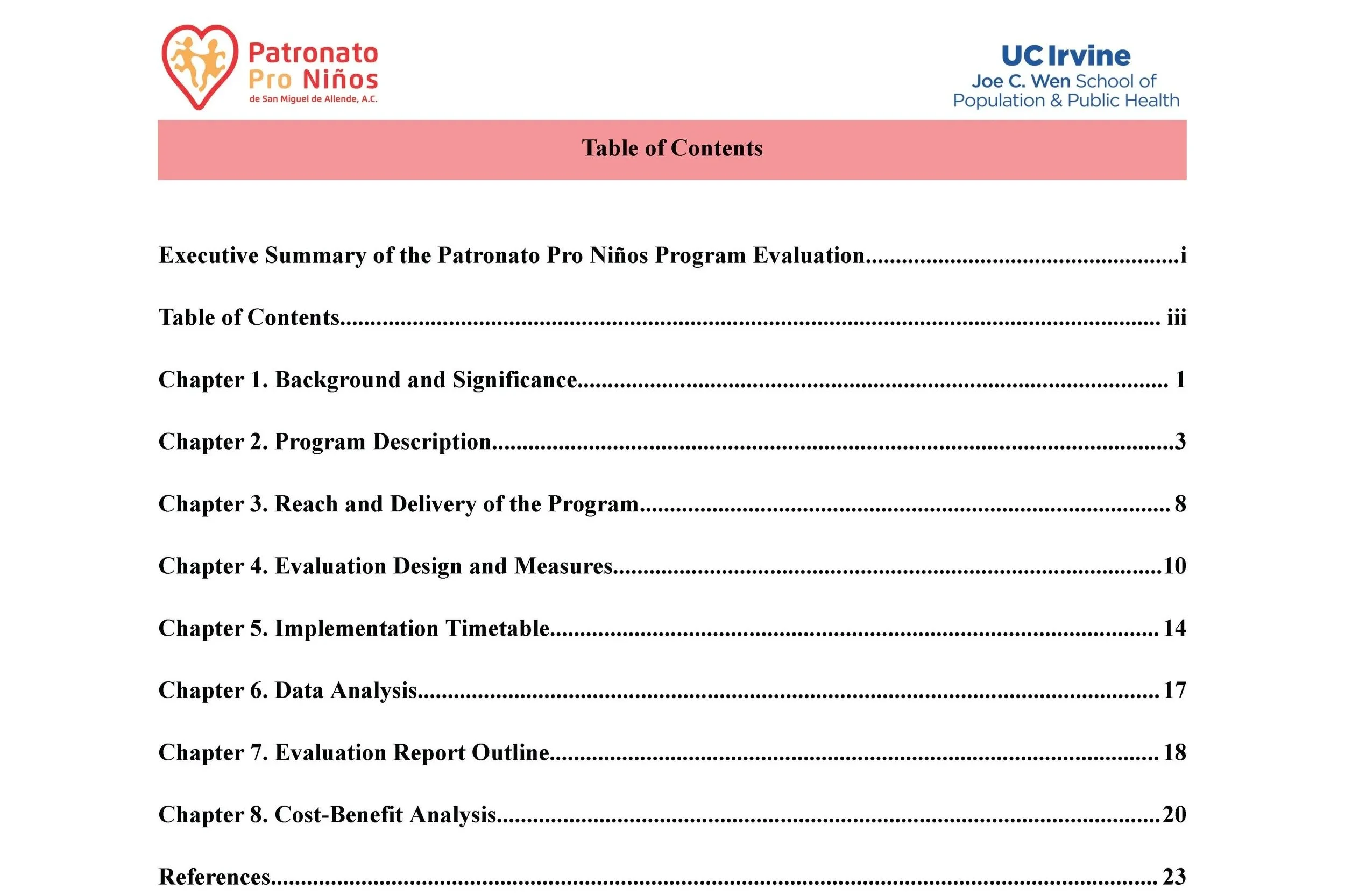
English Program Evaluation Proposal
Prepared a comprehensive evaluation proposal outlining the project's background, evaluation questions, methodology, data collection procedures, timeline, and anticipated deliverables. This document established a shared evaluation framework for academic collaborators and organizational stakeholders while guiding implementation throughout the project.
Spanish Program Evaluation Proposal
Developed a Spanish-language version of the evaluation proposal to improve accessibility for Patronato Pro Niños staff and community partners. Translating the proposal promoted equitable participation, strengthened stakeholder engagement, and ensured evaluation objectives and methods were clearly communicated across languages.
Dissemination
Seminar Presentation
Created and presented a seminar at the UCI Joe C. Wen School of Public Health that summarized the evaluation process, fieldwork experience, methodology, findings, and recommendations. The presentation translated the project into practical lessons for students, faculty, and public health professionals interested in community-engaged evaluation.
Project in the News
The collaboration between Patronato Pro Niños and the UCI Joe C. Wen School of Public Health was recognized through news coverage highlighting the partnership and its commitment to community-engaged public health practice. The article showcased the interdisciplinary nature of the project, the value of international collaboration, and the role of program evaluation in supporting nonprofit organizations that serve children and families.
This recognition reflects the broader impact of academic-community partnerships and demonstrates how evaluation can contribute to strengthening programs while promoting meaningful engagement across borders.
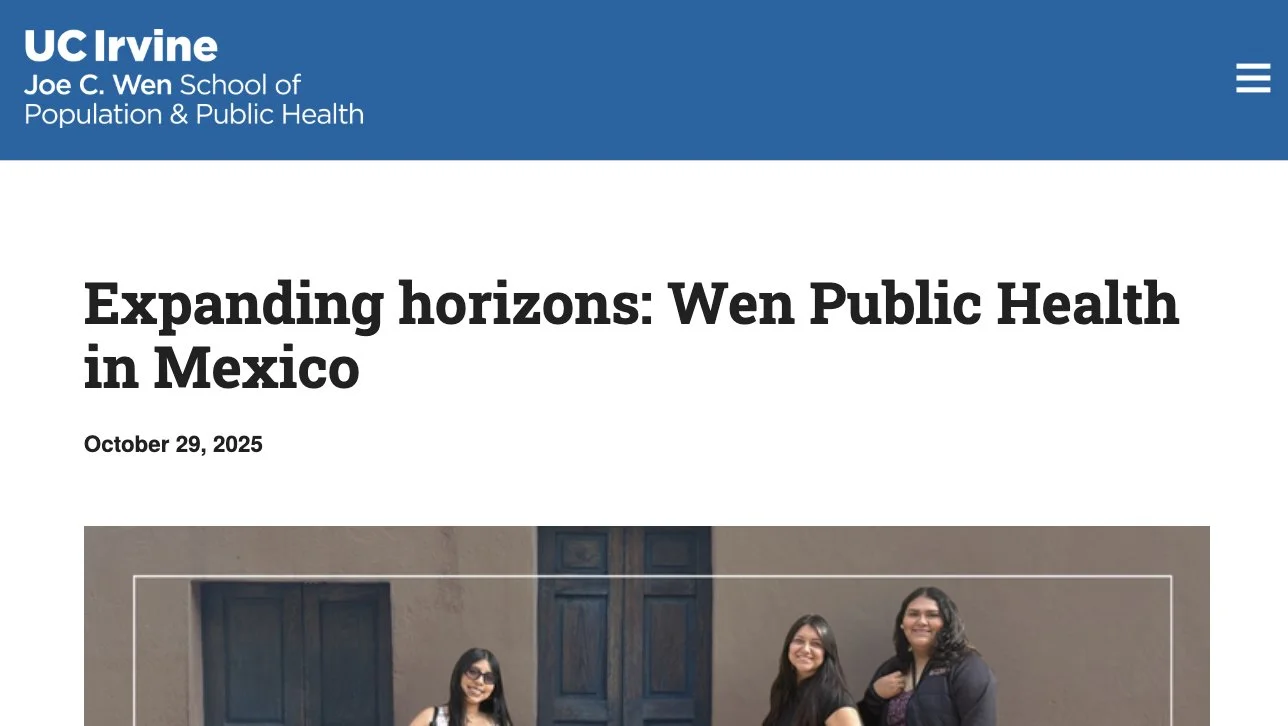
Expanding horizons: Wen Public Health in Mexico
UCI Joe C. Wen School of Public Health | October 29, 2025
The partnership between UCI and Patronato Pro Niños was highlighted for its community-engaged evaluation work conducted in Guanajuato, Mexico.
Community Partnership in Action
Fieldwork in Guanajuato
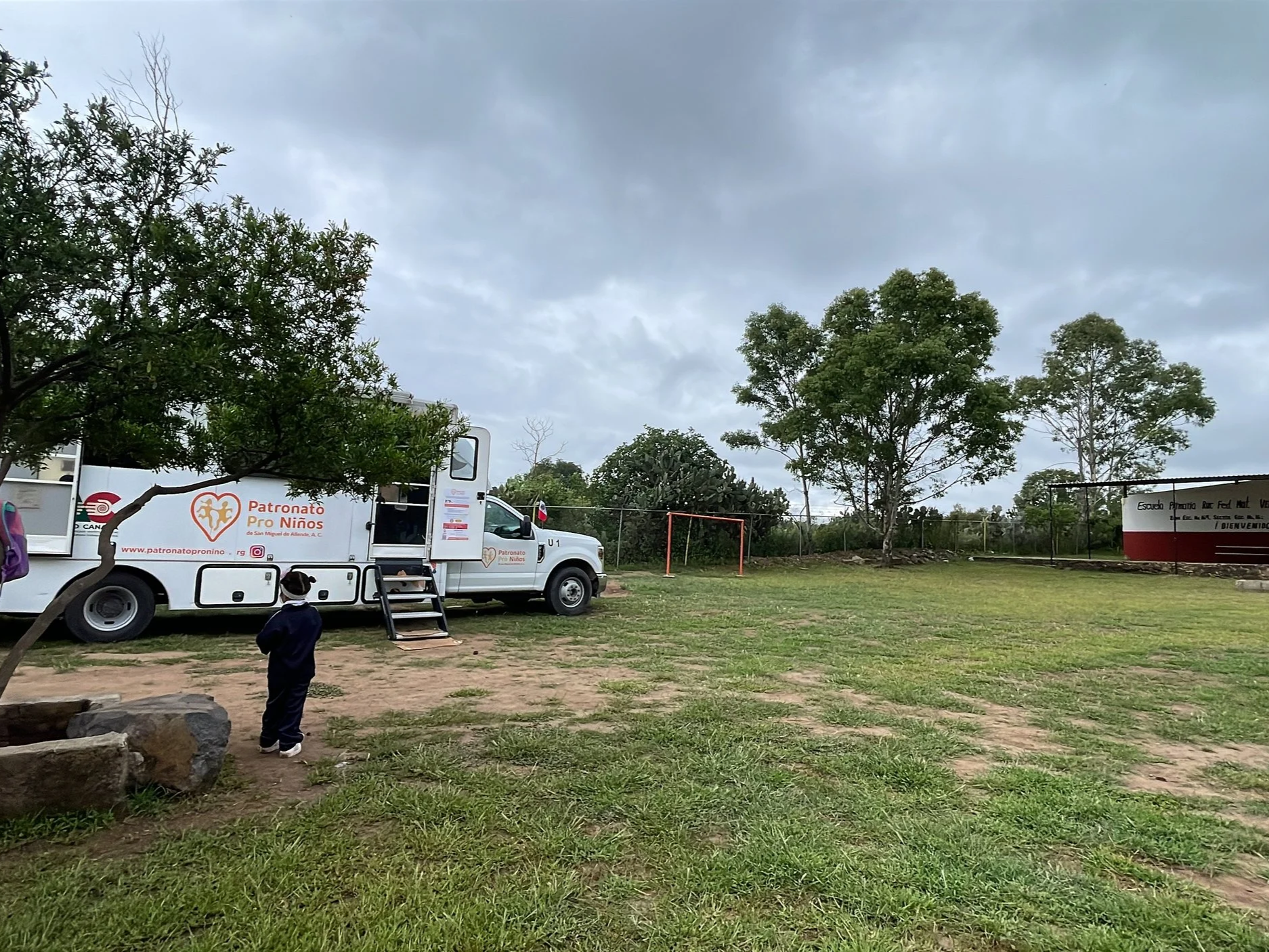
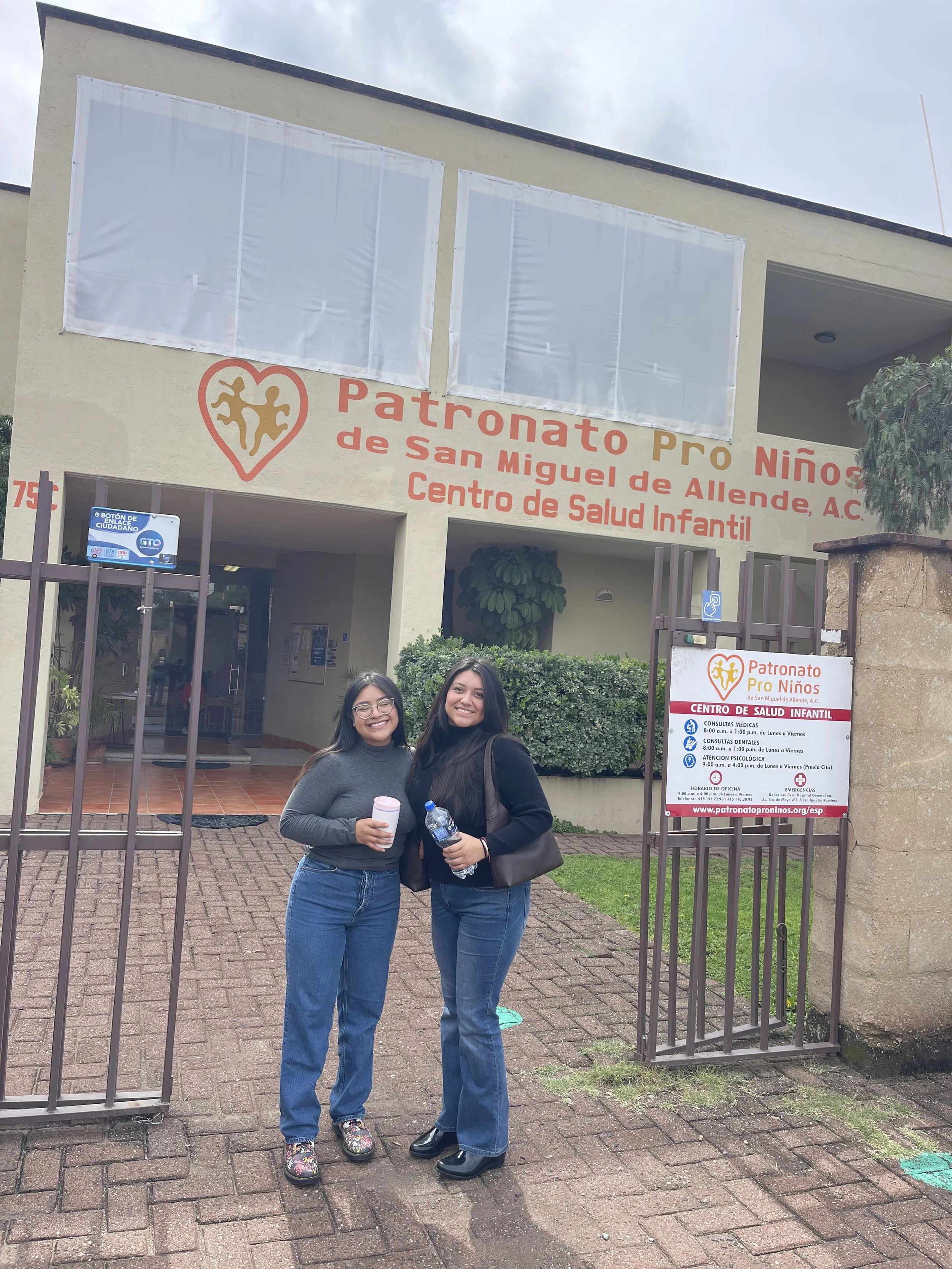
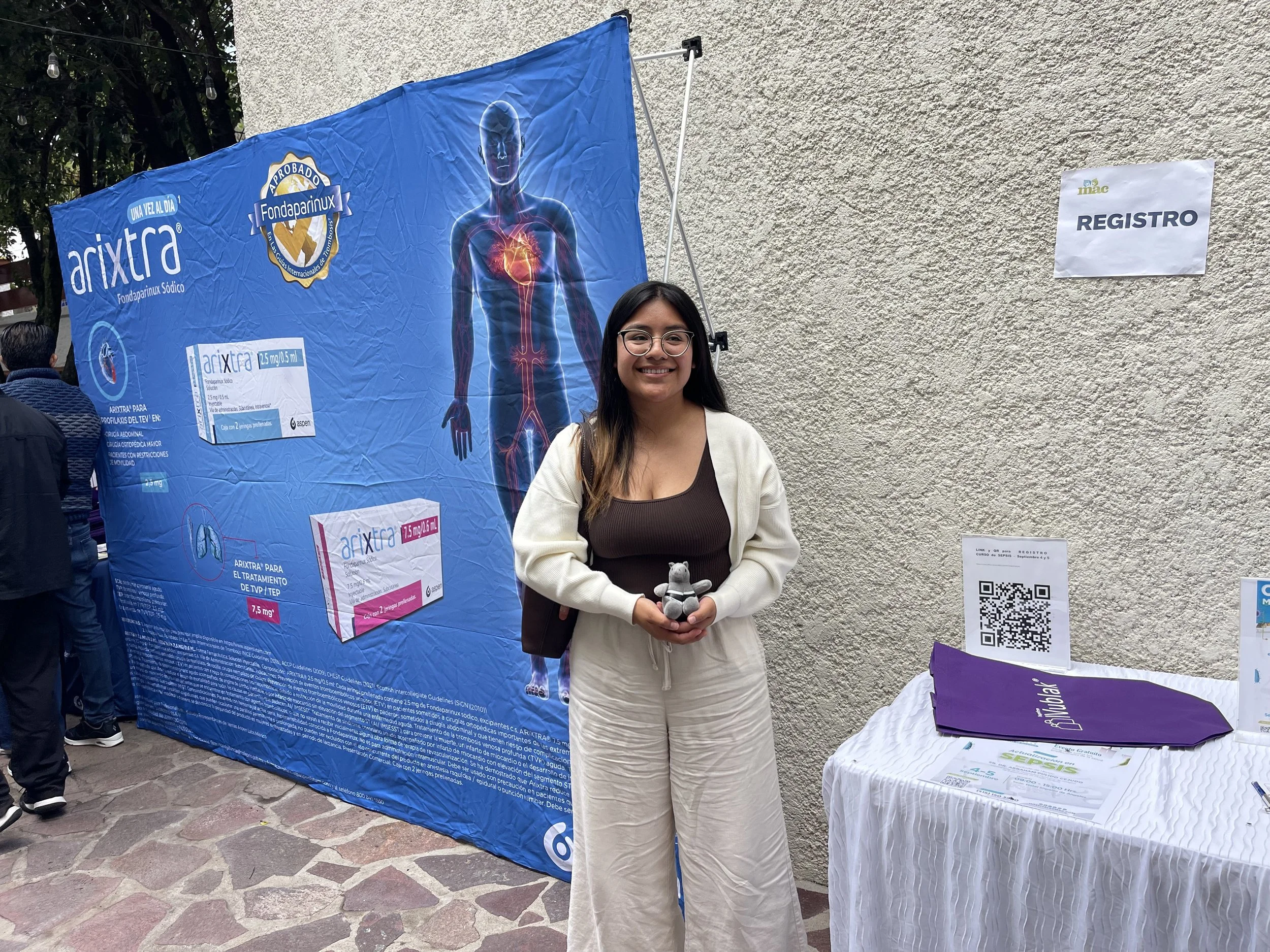
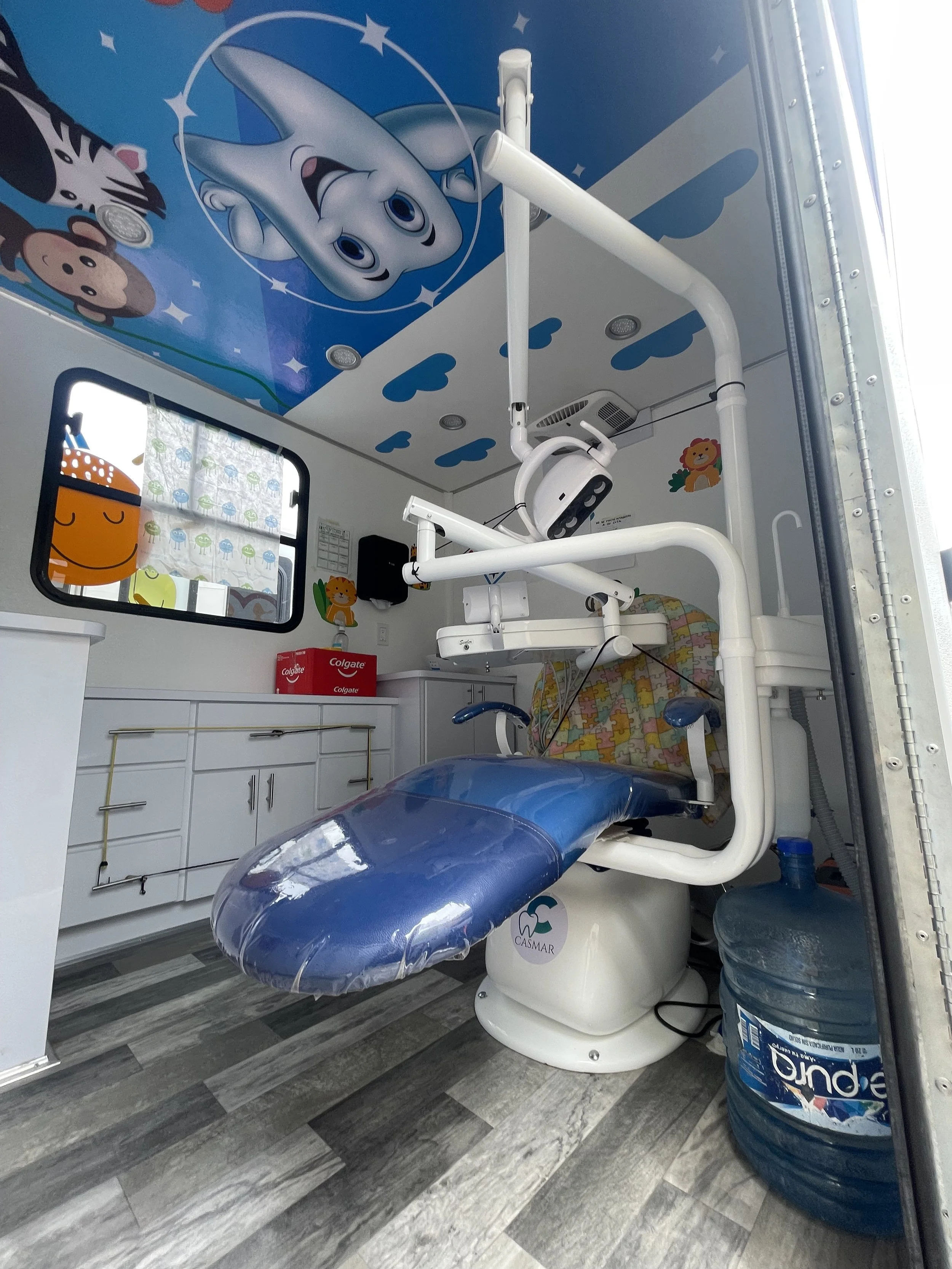
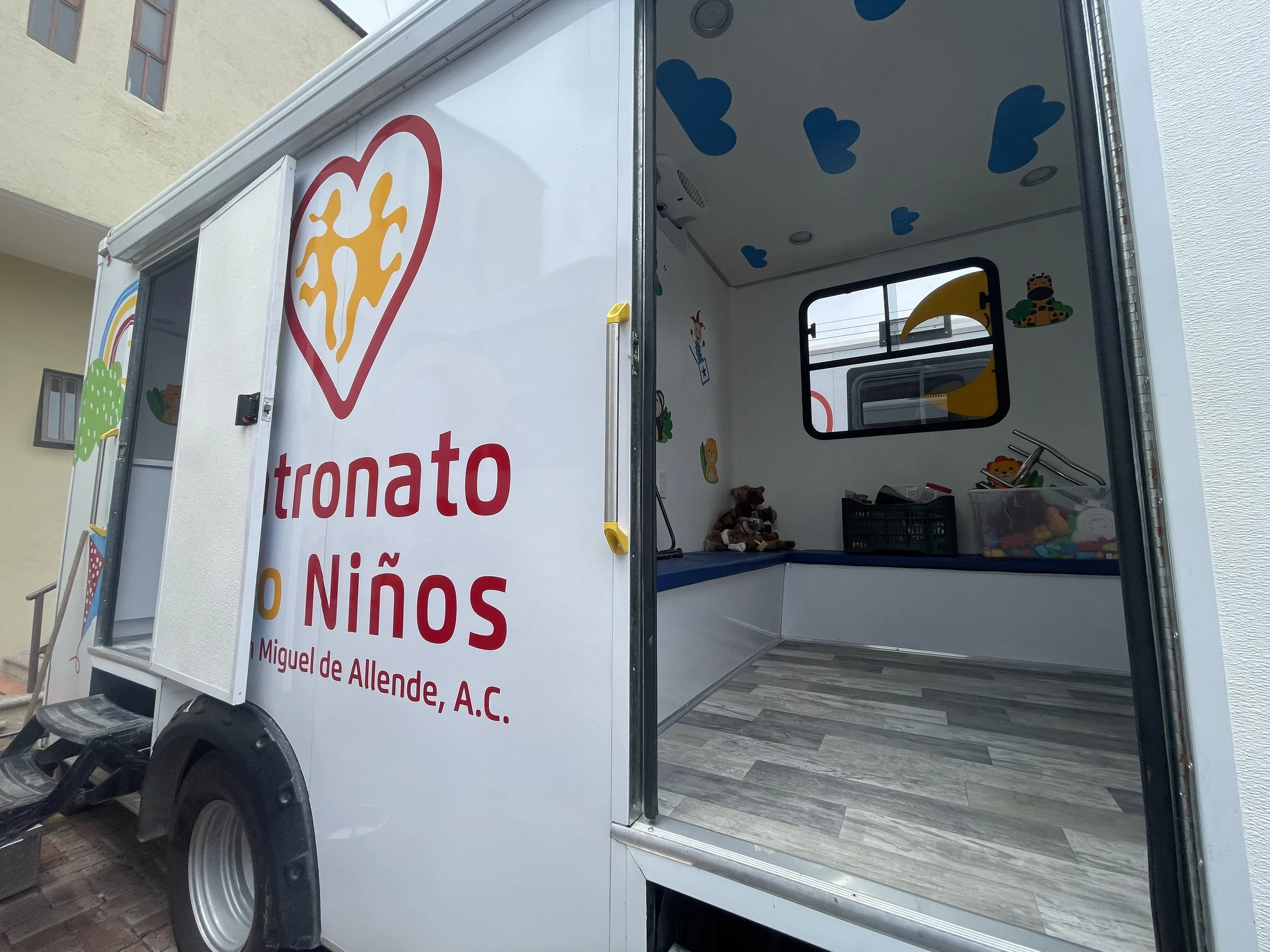
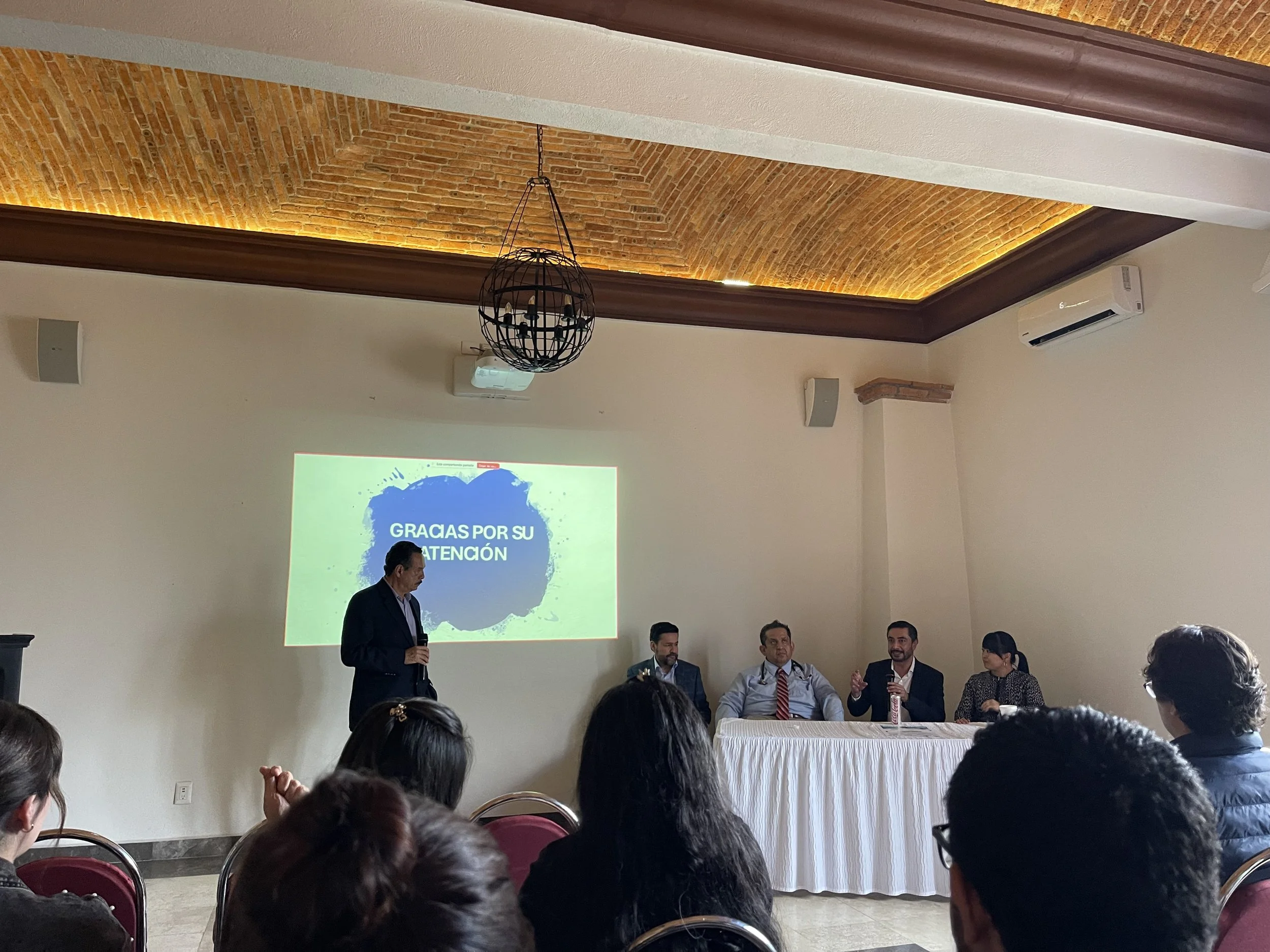
Fieldwork provided the opportunity to engage directly with the communities served by Patronato Pro Niños while gaining firsthand insight into program implementation and participant experiences. Working alongside local partners, our team conducted evaluation activities in community settings, observed program operations, and interacted with children, families, volunteers, and staff.
Beyond data collection, this experience reinforced the importance of cultural humility, relationship building, and community partnership in public health practice. Spending time in Guanajuato allowed me to better understand the strengths, challenges, and resilience of the communities we served while appreciating the value of community-informed evaluation.
Lessons Learned
This experience strengthened my understanding of community-engaged evaluation and reinforced the importance of listening to community voices throughout every stage of the evaluation process. Working alongside local partners demonstrated that meaningful public health practice extends beyond data collection. At its core, meaningful work requires trust, collaboration, cultural humility, and a commitment to translating findings into practical action.
